
How to choose an Transparent LED Film Display?
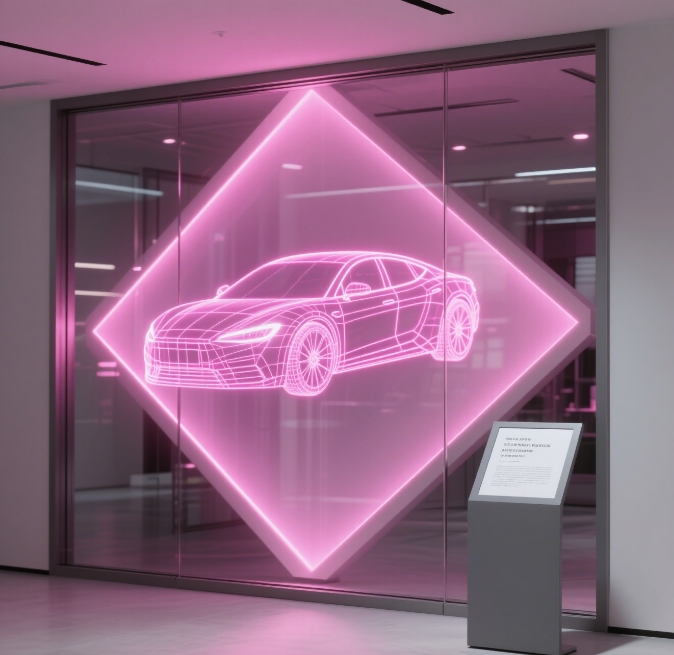
Features of transparent led film display
(1) High light transmittance of 70%-85%, ensuring sufficient light intensity from both the transparent led film display and the glass windows indoors.
(2) Very thin thickness and lightweight. The panel thickness is less than 8 cm, and the net weight is under 15 kg per square meter, requiring no alteration to the building structure. It can be mounted directly on glass windows or suspended from ceiling mounts.
(3) No need for steel support structures, significantly reducing installation and maintenance costs.
(4) Excellent advertising effect, with videos appearing to float on the glass surface, offering a strong sense of artistry and technology.
(5) Compared to outdoor-installed LED screens, they are more conducive to equipment maintenance, offer faster setup, and have better safety performance.
(6) Energy-saving and environmentally friendly. Compared to conventional LED screens, they require no additional air conditioning systems, achieving an energy-saving rate of over 30%, providing superior energy-saving benefits.
(7) High brightness, exceeding 3600 nits, making it suitable for use both during the day and at night.
Five Key Considerations When Selecting a transparent led film display
(1) Regarding the choice of transparency, an transparent led film display can be selected. If you are seeking a transparent LED screen with high resolution, you will inevitably sacrifice some transparency because the PCB needs to be denser. Opting for higher transparency results in a larger pixel pitch, which affects the overall display quality. This is less noticeable on larger screens. Therefore, it is a challenging trade-off, largely dependent on the specific project requirements.
(2) After-sales service and product stability. Currently in the market, some manufacturers use side-lit SMD technology for transparent LED screens, which can suffer from issues with generality, uniformity, and stability, along with higher costs. The use of QFN IC drivers can make servicing more difficult. Transparent LED screens are produced in relatively small quantities and are mostly custom-made, leading to higher costs for users.
(3) What constitutes true "transparency"? True transparency means the transparent led film display should integrate seamlessly with the glass window, appearing almost invisible, rather than being completely see-through.
(4) Standardized or customized? Standardized products reduce costs, while customization allows the transparent LED screen to better fit the specific structure of the glass window.
(5) The design of transparent led film display results in relatively low contrast. Therefore, the video content is crucial. It is essential to display only the intended content on the screen and eliminate background colors.