
Will Flexible Transparent LED Screens Affect Indoor Lighting?
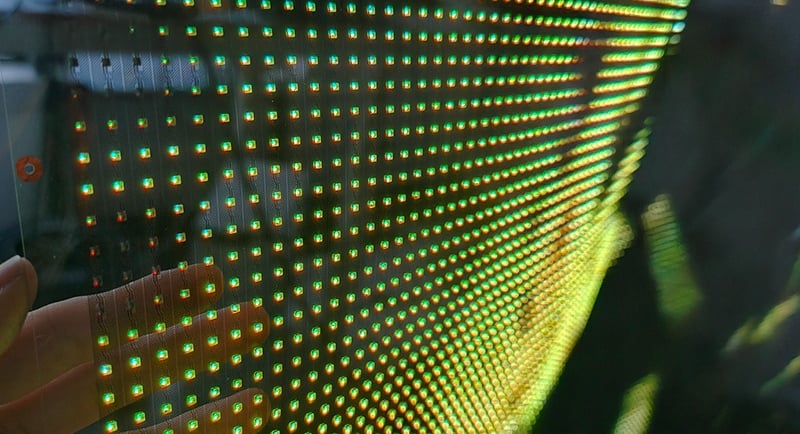
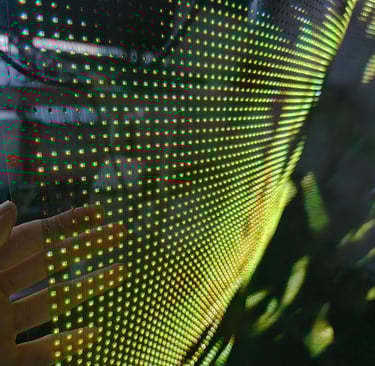
Whether an flexible transparent led screen affects indoor lighting is a common concern for users. Since these screens are primarily used for glass curtain walls and shop windows, it is essential to balance display performance with natural light requirements. From a structural perspective, these screens are designed with transparency as a core priority.
Structural Transparency
Flexible transparent led screen achieve display functionality through a dot-matrix arrangement of light-emitting units. Significant gaps are maintained between these units, allowing natural light to pass through the screen and enter the room. Compared to traditional LED displays, the physical obstruction is significantly reduced, resulting in high overall transparency. When not in use, the screen remains relatively unobtrusive.
Key Influencing Factors
The impact on lighting is closely related to specific product parameters:
Pixel Pitch: A larger pixel pitch means more open space between LEDs, resulting in higher transparency and less impact on light.
Model Selection: For areas with high lighting requirements, users typically opt for models with higher transparency to strike a balance between visual impact and ambient light.
Visual Impact During Playback
When active, the impact on lighting is mainly reflected in brightness changes. As the screen displays content, specific areas become active light sources, which can affect the visual environment. However, this effect is usually concentrated in the area directly facing the screen and has a limited impact on the overall lighting of the room. Adjusting the playback brightness can help minimize interference with the indoor environment.
Installation and Planning
Installation methods also play a role. When the screen is attached to the inner surface of the glass, it offers minimal obstruction to external natural light. Conversely, multi-layer installations may lead to a decrease in light transmission. Planning the layout during the design phase, in conjunction with the building's natural lighting conditions, ensures the best possible results.
Overall, when selected and installed correctly, flexible transparent LED screen have a negligible impact on indoor lighting. Their transparent structural design allows them to maintain a balance between functional display and environmental needs, making them ideal for scenarios where natural light is a priority.