
Power Wiring Guidelines for LED Flexible Film Screens
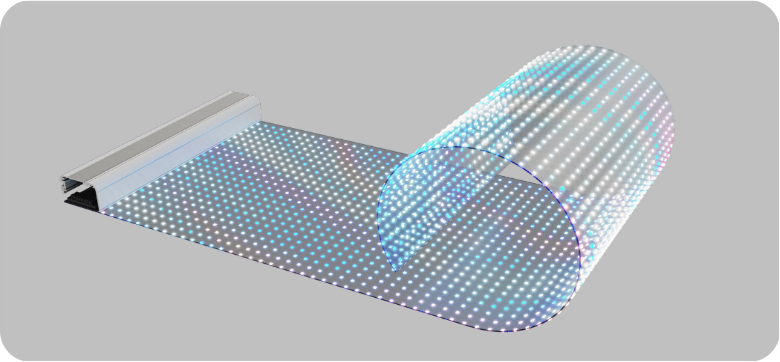
In the application of LED flexible film screens, power wiring is a critical factor for users. Since these screens are typically mounted directly onto glass or transparent substrates, their wiring requirements differ significantly from traditional LED displays. Proper power planning is essential to ensure the long-term stability of the display system.
1. Power Estimation and Load Management
LED flexible film screens generally utilize low-voltage DC power, converted through dedicated power modules.
Total Power Calculation: Before installation, you must identify the screen's power parameters and calculate total demand based on the installation area.
Stability: Underestimating power needs can lead to unstable supply and poor display quality.
Load Distribution: Distributing power across multiple units helps reduce the load stress on any single point.
2. Concealed Path Planning
Because flexible film screens prioritize visual transparency, power and signal cables must be hidden.
Routing Methods: Common techniques include routing cables along the glass frames or utilizing the internal cavities of curtain wall structures.
Aesthetics: Avoiding exposed wiring is vital to maintaining the seamless, high-tech aesthetic of the glass surface.
3. Cable Specifications and Connection Safety
The choice of cable specifications directly impacts system safety:
Wire Gauge: Select the appropriate wire diameter (gauge) based on the current to minimize heat generation. Undersized cables can overheat during prolonged operation, compromising stability.
Secure Connections: All power connectors must be firmly attached. Loose connections are a primary cause of "flickering" or intermittent display issues.
4. Partitioned Power Supply for Large Arrays
When splicing multiple film screens together, partitioned power supply (zoning) becomes essential:
Voltage Drop Mitigation: Dividing the screen into independent power zones reduces voltage attenuation, ensuring consistent brightness and color across the entire display.
Reliability & Maintenance: Independent zones improve overall system redundancy. Each zone should be clearly labeled to simplify troubleshooting and future maintenance.
5. Environmental Adaptability
Environmental factors, particularly for glass curtain walls, must be addressed:
Weather Resistance: Glass surfaces experience significant temperature swings; therefore, wiring materials must offer high weather resistance.
Thermal Expansion: Cables should be secured in a way that allows for thermal expansion and contraction without loosening the connections.