
Technical Advantages of Transparent LED Screen Manufacturers in Customized Display
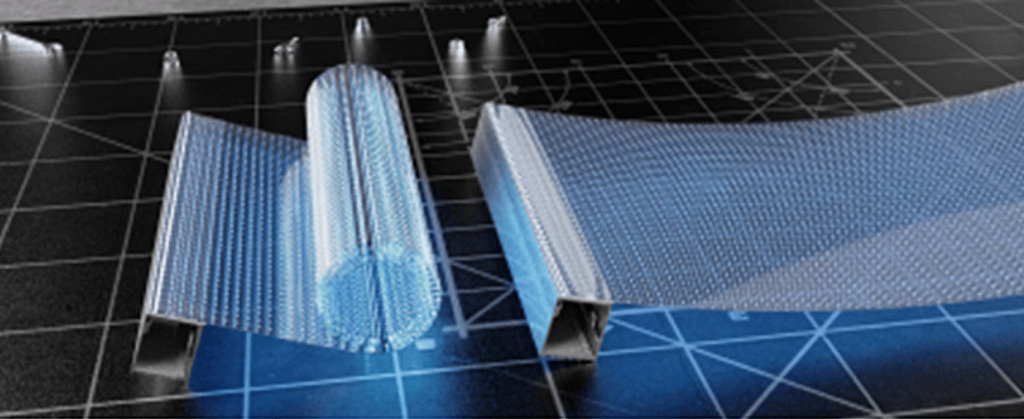
Transparent LED Screen manufacturers are dedicated to the research, development, and production of transparent display technologies. By independently designing circuit layouts and encapsulation structures, they achieve an optimal balance between high light transmittance and system stability. Unlike traditional displays, these screens do not obstruct the line of sight and can be seamlessly integrated with glass curtain walls to create an "invisible display" effect—remaining virtually transparent when powered off and delivering vivid visuals when illuminated.
Core Materials and Customization
High-quality Transparent LED Screen utilize flexible PCB (FPC) materials and micro-pitch LED lamps to ensure superior bending performance and mechanical durability. Manufacturers typically offer bespoke production tailored to specific application environments, allowing for the customization of key parameters such as:
Pixel Pitch (mm)
Transparency Levels
Brightness (Nits)
Control System Compatibility
Structural Design and Optical Performance
In terms of product engineering, manufacturers focus on structural lightweighting and balanced heat dissipation. With module thicknesses of only a few millimeters and minimal weight, these screens are ideally suited for installation on glass curtain walls, commercial windows, and architectural canopies. With transparency rates often exceeding 70%, they preserve natural indoor lighting while fulfilling the dual roles of information dissemination and visual decoration.
Driver Technology and Intelligent Control
From a technical standpoint, manufacturers employ constant current drive and PWM (Pulse Width Modulation) for circuit and signal control, ensuring uniform brightness and color consistency across the display. Many industry leaders have also introduced intelligent control systems, enabling remote content management and real-time equipment monitoring via cloud platforms, which significantly enhances operational and maintenance efficiency.
Project Solutions and Industry Applications
In practical engineering, manufacturers provide comprehensive end-to-end solutions, covering:
Scheme Design
Structural Installation
System Debugging
After-sales Technical Support
These solutions are widely applied in commercial exhibitions, stage performances, transportation hubs, and brand launches. The content is highly flexible, supporting multi-screen synchronization and interactive control.
Future Outlook
As the trend of architectural media intensifies, manufacturers are continuously optimizing performance. By refining encapsulation and modular designs, they are achieving higher resolutions and transparency levels, providing a sophisticated and effective medium for information display in modern architectural and commercial spaces.