
Are transparent led film Suitable for Shopping Mall Advertising?
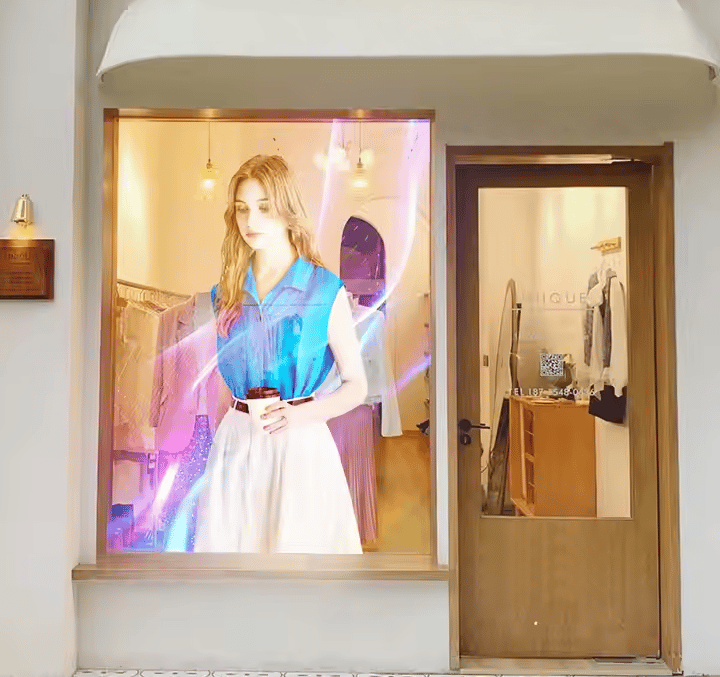
Advertising in shopping malls and supermarkets places high demands on display equipment, particularly regarding viewing angles, brightness performance, content switching speed, installation flexibility, and maintenance convenience. The LED flexible film screen features a lightweight, adhesive structure that can be directly applied to transparent substrates such as glass curtain walls, atrium glass railings, and display windows. Consequently, it has gained significant traction in the commercial advertising industry. When deploying equipment, operators typically evaluate factors such as display effect, transparency, installation methods, and long-term operational costs.
Visual Performance and Transparency
Transparent led film offer high transparency, allowing glass curtain walls to maintain natural lighting during the day without obstructing indoor passage or the visual experience. Simultaneously, they project brand advertisements outward, enabling dual-side exposure both inside and outside the mall. The image clarity is determined by the pixel pitch configuration; for mid-to-close range viewing, the content remains stable and high-definition, making it ideal for product promotions, event announcements, new product launches, and member-exclusive offers.
Flexible Installation and Efficient Operation
Installation spaces in malls are often complex, and large-scale structural modifications are generally discouraged. The LED flexible film screen utilizes a self-adhesive backing, allowing it to be applied directly to existing glass surfaces. This significantly reduces construction cycles and structural interference. Its ultra-light structure facilitates large-area tiling across diverse zones such as display windows, storefront facades, and escalator sides. Furthermore, to accommodate the frequent content updates required by mall management, the system supports remote updates, greatly enhancing operational efficiency.
Brightness Control and Maintenance
For long-duration advertising scenarios, the screen’s brightness can be adjusted to respond to changes in ambient light. It maintains high-brightness displays during the day and reduces output at night to prevent light pollution while optimizing energy efficiency. Maintenance is also streamlined through a modular design, allowing personnel to perform localized repairs, thereby minimizing downtime.
Conclusion
Considering the ease of installation, display quality, and operational adaptability, transparent led film are highly suitable for shopping mall advertising projects. To maximize the visual advantages of these transparent screens, malls should strategically plan their layout based on regional lighting conditions, content attributes, and pedestrian traffic flow.