
Is the LED Transparent Film Screen Drop-Resistant?
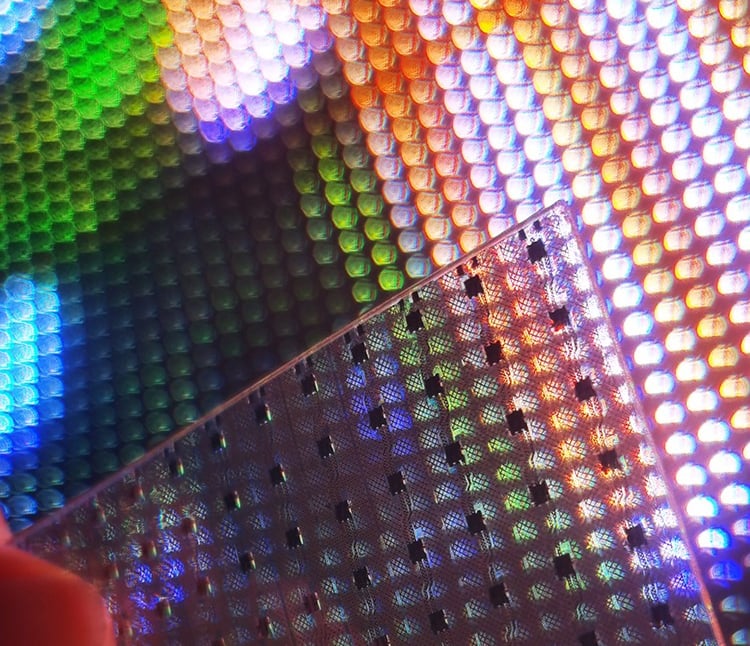
The drop resistance of LED transparent film screens is limited. Constrained by their lightweight, thin structure and material properties, they can only withstand minor bumps and cannot endure severe impacts or falls from significant heights. Targeted protection is necessary during use.
From a structural perspective, the shortcomings in drop resistance are evident. LED transparent film screens have a thickness of only 0.5-2mm and weigh 200-300g/m². The base material is typically PET or sili-cone, with the internal lamp beads and circuit layers being as thin as paper and lacking protection from a rigid outer shell. In terms of performance under external force: if subjected to a minor impact, such as a slide off a desktop (height ≤ 30cm) or a light bump (e.g., being touched by a finger), the screen can usually function normally provided there are no sharp objects on the surface. However, if it falls from a height ≥ 50cm or is struck by a hard object (like keys or tools), it can easily lead to local lamp bead detachment or circuit breakage, resulting in black screens or dead pixels.
The drop resistance varies with different base materials. LED transparent film screens with a sili-cone base material offer greater toughness, with better tensile and impact resistance than PET-based ones. They are less prone to cracking during minor bends or falls, making them suitable for temporary displays or scenarios with frequent movement (e.g., trade show booths, pop-up stores). Products with a PET base material have slightly higher hardness but are more brittle. They are prone to creasing in the base material upon dropping, which can lead to display image discontinuity or fracturing. They are better suited for fixed installations without movement (e.g., storefront windows).
Usage scenarios need to match the drop resistance capability.
Fixed installation scenarios (e.g., adhered to glass or walls): The screen is firmly fixed, with a low probability of being impacted by external force. The need for drop resistance is relatively low.
Temporary use scenarios (e.g., exhibition setups, event arrangements): The screen requires frequent handling or disassembly, making it prone to drops. Extra protection is needed—use soft storage bags during handling, avoid mixing with hard objects, and handle with care during installation.
Auxiliary measures can enhance drop resistance.
For temporary use, paste a thin layer of foam padding on the back of the LED transparent film screen to increase cushioning.
For outdoor installations, choose products with a protective frame. Made of lightweight aluminum alloy, the frame doesn't hinder the screen's flexibility but can withstand minor impacts.
During transportation, use custom foam boxes filled with bubble wrap to ensure the screen doesn't shake or collide inside the box.
If a drop or impact occurs, inspect the screen promptly. First, visually check the screen surface for obvious creases or damage. Then, power it on to test the display effect, looking for black screens, flickering, or dead pixels. If there are only minor surface scratches with no display abnormalities, it can continue to be used. If display malfunctions appear, contact the manufacturer for inspection. Minor issues (like a single damaged lamp bead) can be repaired by replacing a local module. Severe issues (like extensive circuit breakage) may require replacing the entire screen.
When choosing a screen, assess the drop resistance needs based on the usage scenario. For fixed installations, standard products are sufficient. For temporary use or frequent movement, opt for sili-cone-based products and use protective accessories. Also, avoid installing them in areas prone to impact (e.g., corridor corners, children's activity areas) to reduce the risk of dropping or collision from the outset.