
Is the Installation Process of LED Flexible Film Screens Complicated?
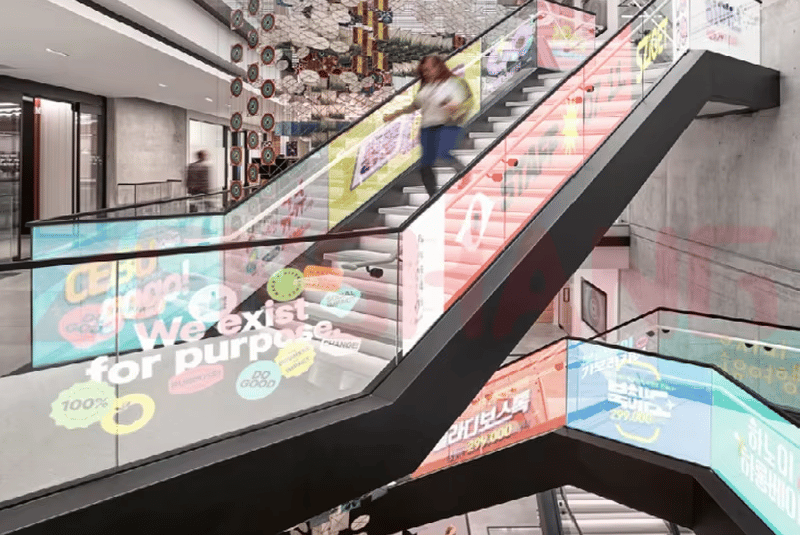
In the current trend of integrating commercial displays with architectural media, LED flexible film screens are increasingly being used in scenarios such as glass curtain walls, showroom windows, and commercial complexes. During the selection phase, many users are particularly concerned about whether the installation process of LED flexible film screens is complicated. The actual situation needs to be analyzed from multiple perspectives, including structural characteristics, construction conditions, and system debugging.
LED flexible film screens adopt a lightweight thin-film structure, with modules that are somewhat flexible and can be attached to glass or flat surfaces. Compared with traditional box-type LED displays, their installation method is closer to adhesive construction and relies less on steel structures. This structure means that the physical fixing steps in the installation process of LED flexible film screens are relatively simplified, but higher requirements are placed on construction details.
In the preparation phase, the installation surface needs to be treated. The glass surface must be kept clean and free of oil stains to avoid affecting adhesion. If used on glass curtain walls, the load-bearing capacity and power cabling paths must be confirmed. LED flexible film screens have certain requirements for surface flatness; local unevenness can affect display uniformity.
During the installation phase, LED flexible film screens are typically installed using specialized adhesive methods or with auxiliary fixing structures. During operation, the modules must be gradually attached in sequence to ensure alignment at the splicing points. Since LED flexible film screens support cutting and customization, complex shaped installations require advance planning of dimensions and cabling. Installers need to have some experience to avoid stretching or damaging the screen body.
The electrical connection stage is equally critical. LED flexible film screens are connected to the control system via ribbon cables, and stable power and signal transmission must be maintained. Proper cabling can reduce signal attenuation. After the control system is installed, point-by-point debugging is required to ensure display consistency.
The debugging phase involves brightness, grayscale, and color calibration. When used in glass environments, ambient light has a significant impact on the visual effect of LED flexible film screens, so parameter adjustments must be made according to the actual application scenario. System calibration can improve the overall display performance.
From a maintenance perspective, LED flexible film screens feature a modular design, allowing local issues to be addressed by replacing individual modules. Due to the adhesive installation method, care must be taken during maintenance to avoid affecting surrounding areas.
Overall, the installation process of LED flexible film screens is not particularly complex, but it imposes high demands on construction standards and detail control. Proper advance planning, standardized construction procedures, and a stable control system configuration can ensure reliable performance of LED flexible film screens in practical applications. For projects requiring large-area glass-based displays, LED flexible film screens offer a solution that balances lightweight design with visual impact.