
What are the applicable scenarios for flexible transparent LED screens?
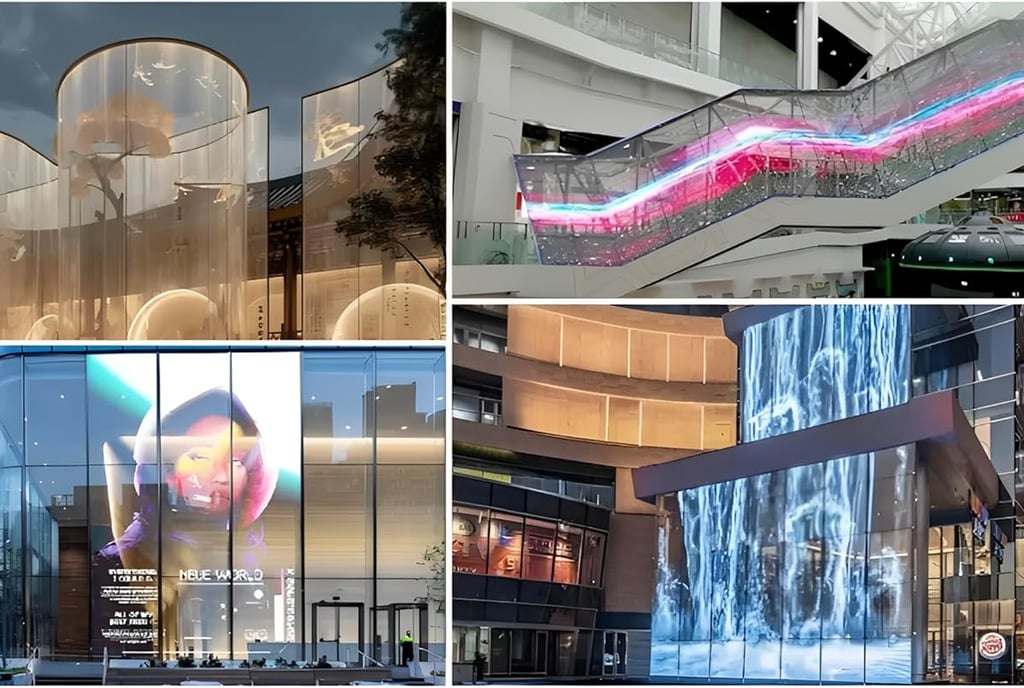
Flexible Transparent LED Screens integrate three defining characteristics—adaptability to curved surfaces, high optical clarity, and superior display performance. This unique combination addresses limitations inherent in conventional rigid or opaque screens, unlocking innovative applications across diverse sectors. Their utility spans architectural integration, immersive experiences, and interactive spaces, as outlined in the following detailed overview.
1. Architectural Integration & Smart Building Facades
This application domain most saliently demonstrates the technology's value by reconciling dynamic media display with fundamental architectural principles of form and function.
Curved Building Skins: Contemporary structures often incorporate curvilinear glass exteriors. These screens conform seamlessly to such geometries, maintaining 70-95% light transmission to preserve daylighting and views. After dark, they transform facades into vibrant media canvases for artistic content, branding, or architectural highlighting, effectively creating luminous landmarks.
Atrium Glazing & Skyroofs: When installed on large-span interior glazing or skylights, the screens remain unobtrusive during daytime. By night, they become dynamic ceilings capable of projecting thematic animations, celestial patterns, or ambient lighting, thereby enhancing the spatial ambiance with a layer of digital luxury.
2. Retail Media & Commercial Advertising
In commercial environments, these displays deliver high-impact messaging without the spatial imposition of traditional signage, maintaining visual openness.
Sculptural Storefronts: High-end retailers utilize curved glazing as a design statement. Applying these screens onto such windows enables the display of high-definition product visuals or brand narratives while preserving transparency into the physical store interior, effectively merging digital promotion with tangible merchandising.
360-Degree Media Columns: In transit hubs or malls, structural columns wrapped with flexible transparent LEDs become cylindrical viewing portals. They circulate advertisements or navigational data while allowing clear sightlines through the column, optimizing space utilization without contributing to visual clutter.
3. Stagecraft & Immersive Entertainment
The demand for custom, boundary-pushing visual environments in live events finds an ideal solution in the screens' formability and semi-transparent nature.
Contoured Stage Elements: They can be engineered into curved backdrops, arches, or overhead elements. This creates layered visual depth, allowing performers, props, or secondary visuals behind the screen to remain partially visible, thus fostering a deep sense of immersion for the audience.
Dynamic Props & Wearables: The screens' pliability allows integration into custom stage props, set pieces, or even performer attire. This enables real-time, interactive visual effects that move and change with the performance, offering unprecedented creative possibilities for directors and show designers.
4. Transportation Hubs & Public Wayfinding
Where clear information dissemination must coexist with spatial awareness and safety, these screens provide an optimal balance.
Integrated Glass Partitions: In airports or train stations, glass dividers or balcony barriers equipped with these displays can show real-time schedules, alerts, or local information. The transparency ensures the space feels open and unobstructed, maintaining critical sightlines for security and orientation.
Interactive Window Media: Installation on the interior of vehicle or station windows enables the overlay of route maps, points of interest, or public service messages. Passengers benefit from the digital information while retaining a full, unimpeded view of their external surroundings.
5. Cultural Exhibits & Public Art Installations
This technology serves as a medium where digital innovation meets artistic expression, often enhancing engagement without dominating the physical space.
Enhanced Exhibition Display: Museums can employ curved screens around artifact casings. They can show detailed animations, reconstructions, or contextual data related to the exhibit, enriching the educational experience while the actual object remains fully visible behind the transparent digital layer.
Kinetic Art Sculptures: Artists and designers can shape the screens into freestanding, organic sculptural forms. By day, these installations function as transparent or reflective artworks; by night, they come alive with programmable light patterns, responding to environmental data or audience interaction, thus fostering new forms of public engagement.
Core Technological Rationale
The fundamental advantage of flexible transparent LED screens is their ability to serve a dynamic visual function without compromising the innate properties of the surface or space they occupy. They fill a critical niche by merging the conformability of flexible displays with the visual permeability of transparent media, a synthesis not achievable with standard rigid or planar transparent options. This makes them particularly indispensable for forward-thinking applications in architecture, experiential design, and media installation.