
Can LED Flexible Film Screens Achieve Transparent Display?
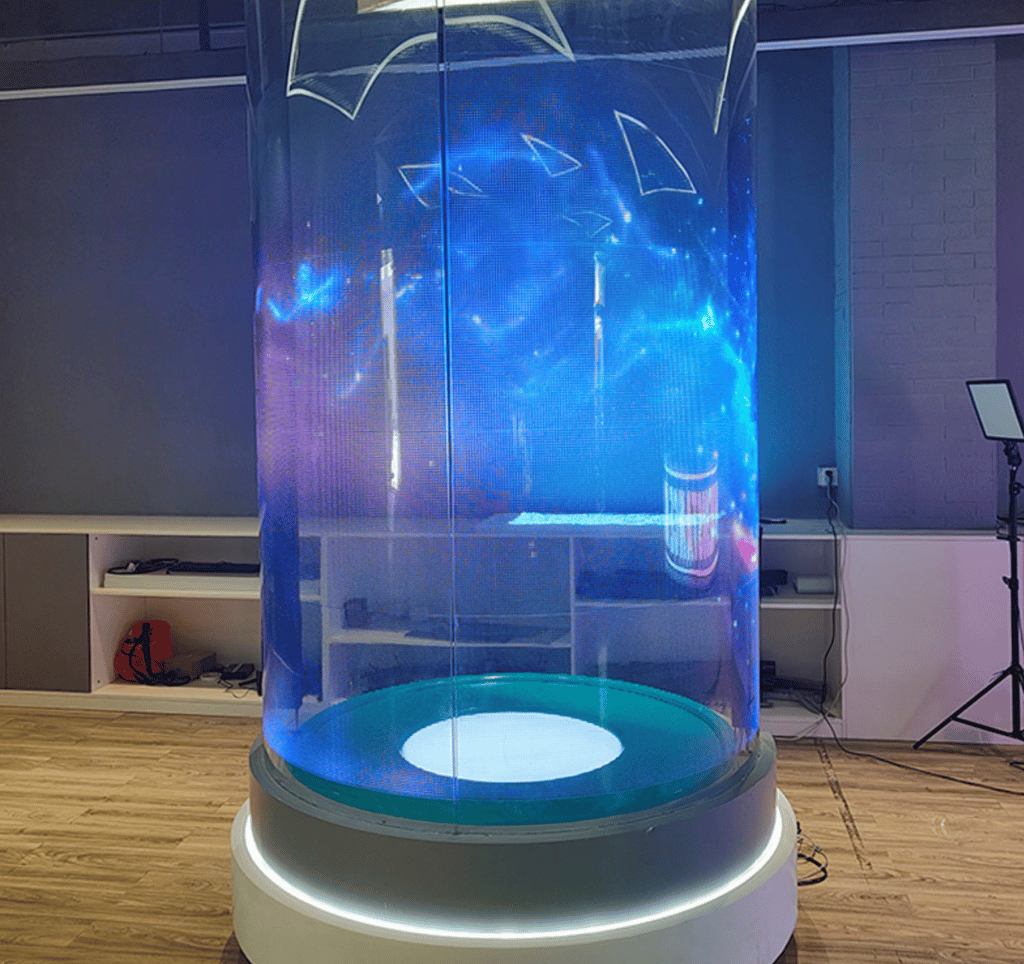
LED flexible film screens, characterized by their thin, lightweight, and bendable properties, offer new possibilities for creative displays and architectural decoration. Transparent display is a significant application direction. By incorporating light-transmitting materials between the substrate and LED modules, partial transparency can be achieved, allowing the screen to display images or videos while maintaining visibility of the background. Transparent LED flexible screens are widely used in settings such as storefront windows, office lobbies, stage backdrops, and in-vehicle displays, enabling dynamic content presentation without obstructing the surrounding view.
The design of brightness and contrast for transparent displays is crucial, ensuring both light transmission and clear, vibrant visuals. By controlling LED density and arrangement, flexible film screens can achieve visual continuity and image integrity in their transparent state. During installation, consideration must be given to the impact of lighting conditions; for instance, strong or direct light may affect display quality, often requiring optimization through brightness adjustment or backlight enhancement.
Transparent LED flexible screens can also be integrated with glass curtain walls or organic glass to achieve digital displays on building facades. Their flexible nature allows adaptation to curved or arched designs, meeting diverse spatial requirements. In terms of content playback, transparent LED screens support multiple image and video formats and can be remotely scheduled and updated in real-time via control systems. As technology advances, the transmittance and brightness of transparent displays continue to improve, making them increasingly popular in commercial advertising, public exhibitions, and creative design. Transparent LED flexible screens offer relatively convenient installation and maintenance, reducing downtime. In the future, transparent displays will become a key development direction for LED flexible film screens, providing greater flexibility for spatial design and information communication.