Application of Transparent LED Film in Exhibition Hall Design
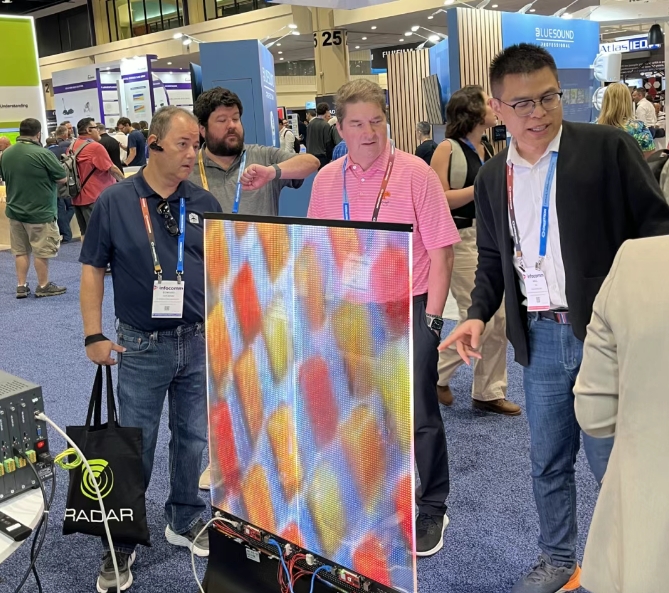
Exhibition hall design emphasizes visual presentation effects and spatial interactive experiences. Technological exhibition halls, corporate showrooms, and cultural display spaces are gradually incorporating digital display devices. As a new type of display technology, the LED flexible film screen has gained attention in the field of exhibition design. The Transparent LED Film adopts a thin-film structure design, allowing it to be attached to surfaces of glass, acrylic, or other transparent materials, achieving a transparent display effect. This enables exhibition spaces to maintain an open visual effect while possessing digital display functionality.
The application characteristics of LED flexible film screens in exhibition hall design are firstly reflected in the transparent display structure. Traditional display devices usually require the installation of fixed screen structures, occupying exhibition space. LED flexible film screens, installed on glass surfaces in the form of a transparent film, make the displayed content appear to float within the space. Visitors can watch the video content while also seeing the interior structure of the exhibition hall. This transparent display method enhances the spatial layering.
The flexible installation structure offers more layout options for exhibition design. LED flexible film screens can be cut and installed according to the dimensions of the display area. They can be installed on curved glass, arched display walls, or transparent partition locations. Designers can plan different display areas based on the exhibition theme. The flexible structure makes the spatial layout of the exhibition hall more adaptable.
In terms of digital display content, Transparent LED Film can play various content such as company introductions, product showcases, and digital animations. When installed on glass partitions within the exhibition hall, the displayed content can form a continuous visual picture. Corporate brand information is presented through dynamic display methods. Audiences can continuously view the digital content as they move through the exhibition hall.
Another characteristic of Transparent LED Film in exhibition hall design is the visually lightweight effect. The thin-film structure has a minimal screen thickness and does not create a sense of oppression in the exhibition space. In the transparent display state, the screen structure is relatively inconspicuous. The overall design style of the exhibition hall can maintain a clean and simple visual effect, with the displayed content becoming the visual focal point of the space.
The equipment control system is also an important part of the digital display in exhibition halls. LED flexible film screens can be centrally managed through a control system. Multiple film screens can form a linked display picture. During exhibition activities or product launches, the displayed content can be adjusted according to the event's theme. This digital display format provides more interactive presentation methods for the exhibition hall.
In summary, the application of Transparent LED Film in exhibition hall design is primarily manifested in aspects such as transparent display structures, flexible installation methods, digital presentation effects, and spatial visual optimization. As exhibition presentation methods gradually evolve towards digitalization, Transparent LED Film hold broad application value in corporate exhibition halls, technology pavilions, and cultural display spaces.